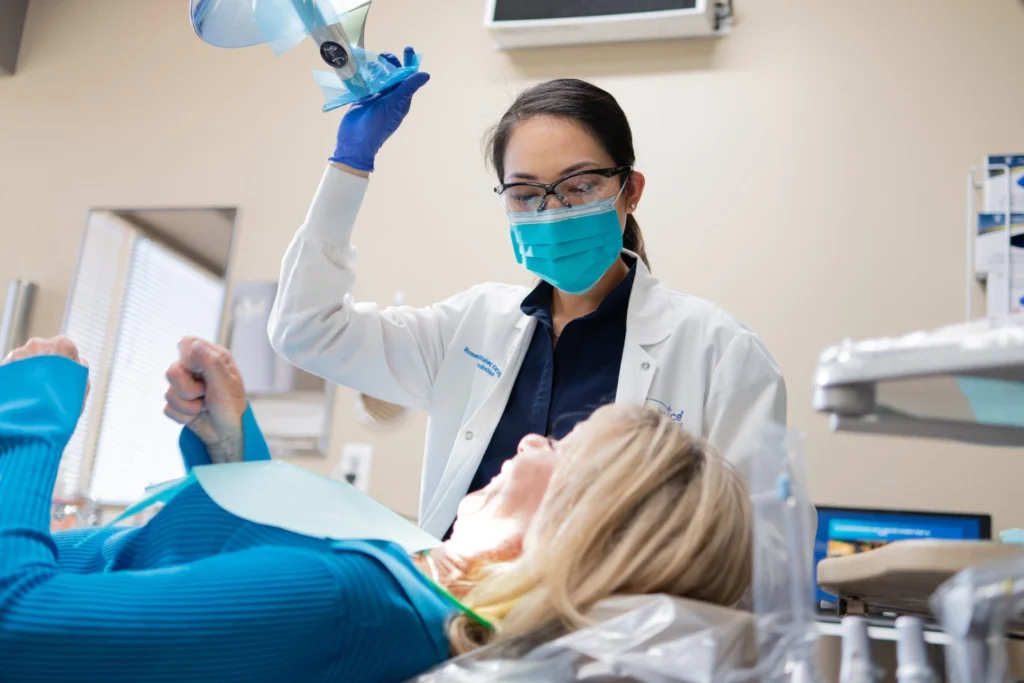

A dental bone graft is a procedure that adds bone or bone-like materials to the jaw. The main purpose is to create a stable foundation for dental implants by increasing bone density and volume.
When you lose a tooth or experience severe gum disease, the underlying bone can weaken or even deteriorate. A bone graft helps restore the lost bone, making it possible to securely place dental implants.
Depending on what’s best for your unique oral health, your dental provider will decide which type of bone graft is best. Speak with your ClearChoice team to learn more about your options.
Types of Bone Grafts:
Allografts
Autografts
Xenografts
Alloplastic grafts
Before the procedure, your dental provider will conduct a thorough examination, including X-rays or CT scans, to assess your bone structure. They’ll give you specific instructions on how to prepare.
Patient Comfort: We provide options for optimal comfort.
Graft Placement: The bone graft material is securely placed.
Closure: The gum is then stitched and the healing process begins.
Dental implants require a solid foundation from the jawbones to ensure their long-term success. Here are the key reasons why bone grafting is often necessary before undergoing dental implant treatment:
The cost of a dental bone graft varies depending on the type of graft, the complexity of the procedure, and the geographical location. On average, it can range from several hundred to several thousand dollars.
Although ClearChoice Dental Implant Centers do not accept insurance, it’s possible that your provider can cover some of the bone grafting procedure. Check with your insurance provider for details. ClearChoice also offers third-party financing to make the cost more manageable.
It’s best to maintain good oral hygiene, follow your dental provider’s instructions, and attend all follow-up appointments to ensure proper recovery.
Most patients can expect a total healing period from 3 to 9 months. During this time, it’s recommended to avoid strenuous activities, eat soft foods, and keep the surgical area clean.
Over-the-counter pain relievers and prescribed medications can help manage pain and discomfort. Follow your dental provider’s guidelines for medication use.
Success rates for bone grafts are high, depending on the type of graft and the patient’s overall health.
A dental bone graft typically costs between $300 and $3,000 per graft site, depending on the type of graft, the amount of bone needed, and the location in the jaw. Complex procedures like sinus lifts can range from $1,500 to
$7,000.
Yes, dental bone grafts are considered safe and well-established with a 90-95% success rate when performed by a specialists such as an oral surgeon, periodontist, or prosthodontist. And if patient medical and healing factors are controlled. All donor bone materials used in the U.S. are rigorously screened and regulated by FDA-regulated tissue banks.
Primary risk factors that may increase complication rates and should be addressed by your surgeon.
Smoking
Uncontrolled diabetes
Poor oral hygiene
Certain medications (bisphosphonates, immunosuppressants)
A dental bone graft typically takes 3 to 8 months to fully heal before a dental implant can be placed. Most patients feel back to normal within 1 to 2 weeks, but internal bone maturation continues for several months.
Weeks 1-2: Soft tissue heals; swelling and discomfort subside
Months 1-3: New bone cells begin colonizing the graft material
Months 3-6: Graft integrates with natural bone (small-to-medium grafts)
Months 6-8: Full maturation for large grafts
Yes, alternatives include ridge expansion and sinus lift procedures, which your dental provider can discuss with you.
A dental bone graft is a surgical procedure that rebuilds or repairs bone in the jaw using bone material from your own body, a donor, or an animal source. It can direct your own body to create the bone volume needed to support dental implants or preserve jaw structure after tooth loss.
When a tooth is lost or extracted, the surrounding jawbone begins to shrink a process called resorption because it no longer receives stimulation from the tooth root. A bone graft halts this process by introducing new
bone material that fuses with your existing jaw over several months.
Autograft: Bone transplanted from your own body
Allograft: Donor bone from a regulated human tissue bank
Xenograft: Highly regulated processing of bone from an animal source (typically bovine)
You are likely a good candidate if you have experienced bone loss due to tooth extraction, gum disease, or injury, and are in generally good health. Your surgeon or prosthodontist at ClearChoice will assess bone volume using
3D cone beam CT imaging to determine how much grafting is needed.
You may be a candidate if you:
Are planning to receive a dental implant and lack sufficient bone volume
Recently had a tooth extracted and want to preserve the socket
Lost bone due to periodontal (gum) disease
Experienced jaw bone loss from trauma or infection
Are a non-smoker or willing to quit (smoking significantly impairs healing)
Your oral surgeon numbs the area with local anesthesia, makes a small incision in the gum tissue to expose the jaw bone, places the graft material, and closes the site with sutures. The entire procedure typically takes 45 to 90
minutes.
Step-by-step:
1. Local anesthesia and optional sedation administered
2. Small incision made in the gum to access the bone
3. Graft material placed into the deficient bone area
4. Protective collagen membrane placed over the graft
5. Gum tissue sutured closed and healing begins
A dental bone graft is not painful during the procedure because local anesthesia fully numbs the area. Afterward, most patients experience mild to moderate soreness and swelling for 3 to 5 days, well-managed with
prescribed or over-the-counter pain medication.
During procedure: No pain local anesthesia eliminates sensation
Hours 1-24: Numbness wears off; mild-to-moderate soreness begins
Days 2-4: Peak swelling; managed with medication
Days 5-7: Significant improvement for most patients
Day 7-10: Sutures removed; most discomfort resolved
Stick to soft foods for the first 1 to 2 weeks after a dental bone graft. Avoid hard, crunchy, or chewy foods that could disturb the graft site or sutures. Chew and keep food to the other side of your mouth for several weeks.
Recommended foods:
Yogurt, smoothies, and protein shakes
Mashed potatoes, scrambled eggs, and soft pasta
Soup (lukewarm) - avoid hot liquids while you are still numb
Applesauce, pudding, and soft fruits
Foods to avoid:
Hard foods (chips, nuts, raw vegetables)
Chewy foods (steak, bagels, gummy candy)
Spicy or acidic foods that irritate the site
Yes, bone graft failure can occur, though it affects fewer than 5-10% of cases. Signs of failure include persistent pain or swelling, beyond the normal healing period, infection such as a yellow fluid coming from the suture area, or visible graft material coming loose from the site.
Common causes of graft failure:
Smoking (the #1 preventable cause)
Infection at the graft site
Poor blood supply to the area
Uncontrolled systemic conditions (diabetes, autoimmune disorders)
Trauma to the site during healing
If a graft fails, it is often retreatable - the site is cleaned and the reason for failure is determined. Later the area is grafted again.
Most patients can receive a dental implant 3 to 6 months after a bone graft, once the graft has fully integrated with the natural bone. Larger grafts or sinus lifts may require 6 to 8 months before implant placement.
Your oral surgeon will confirm readiness using a follow-up CT scan to verify bone density and volume before scheduling implant surgery.
Ready to transform your smile with dental implants? Learn more about the treatment process and discover if you need a bone graft by scheduling a free consultation today.